The Specialized App
This is the story of consolidating a fragmented, multi-app rider experience into a single native product – and building the component foundation that would let Specialized scale it consistently across iOS and Android.
Overview
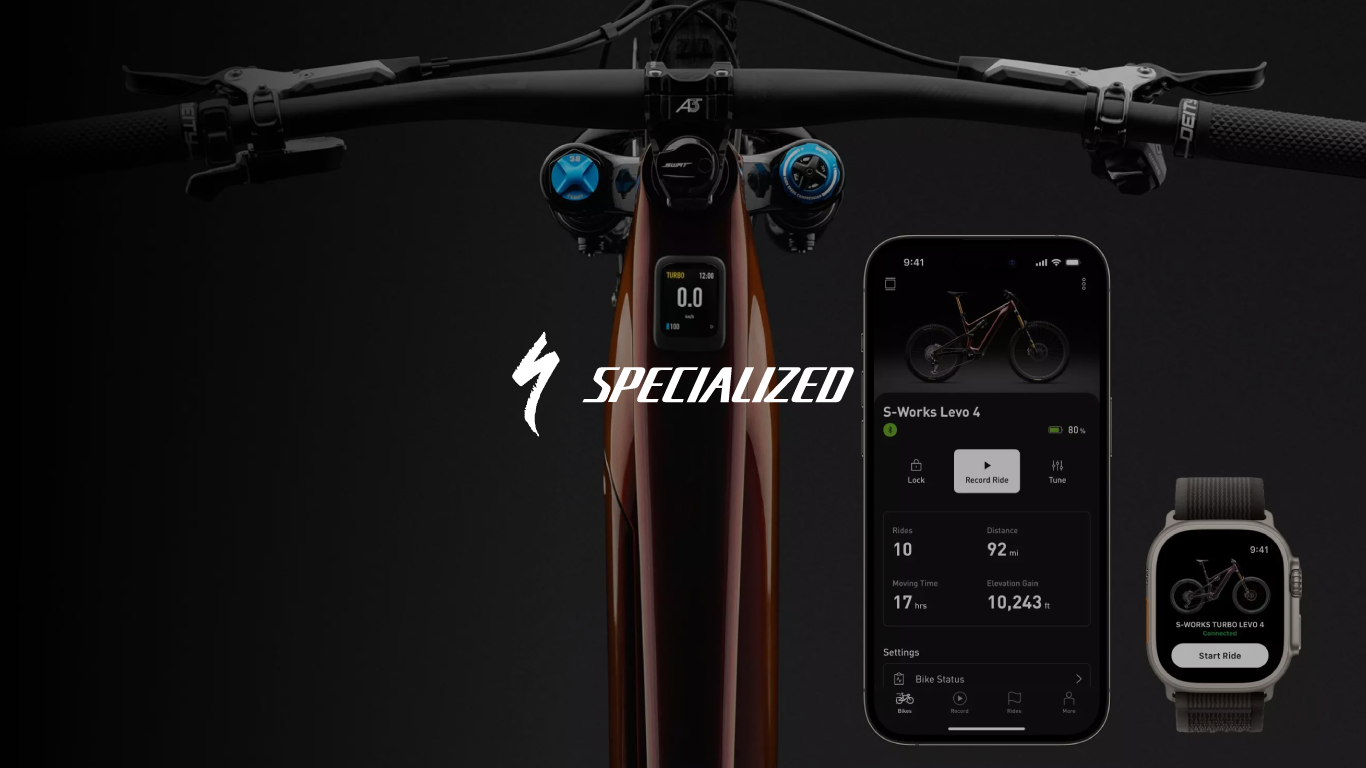
The Specialized App is a cycling companion app that lets riders track rides, analyze performance, and manage their bike. It offers deep integration for Turbo e-bikes (power tuning, battery management, and security features) and integrates with platforms like Strava and Apple Health to enhance the overall riding experience.
When I joined the mobile app team at Specialized, the rider-facing app ecosystem was focused on rebuilding the fractured experience across multiple digital products.
My work focused on consolidating that experience into a single, unified app and building the design foundation that would allow the team to scale it consistently across platforms.
Key Takeaways
The Challenge
Riders were navigating multiple apps to manage their bike experience, creating friction, drop-off, and low feature adoption.
My Role
Native app product designer supporting Director of UX, Apps with UX strategy, user journeys, information architecture, and design system for the full app consolidation & migration. I worked across iOS and Android in close partnership with engineering, product, and QA.
The Approach
Audited the existing ecosystem before touching UI, established a unified navigation structure first, and built every component with reuse and system scalability in mind.
Solution and Outcome
A single, rider-centered app that eliminated fragmentation, surfaced key features more clearly, and laid the foundation for Sequoia, Specialized's enterprise design system.
Few metrics I can share, based on 2024 data from app & riders:
- 417k new installs
- 21k unique cities
- 188 unique countries
- 274k MAUs (monthly active users)
- 529 million minutes moving (+1,000 years)
- 2 billion meters of climbing
Lessons Learned
The most impactful design work on this project happened before any screens were made. Alignment on structure and system thinking from day one prevented rework and created compounding value beyond the project itself.
The Challenge
Specialized riders were managing their connected bike experience across multiple disconnected apps.
- Fragmented experience – inconsistent UI patterns and duplicated functionality created confusion about where features lived and what app did what.
- Low feature understanding – key features like Turbo tuning and ride analytics were not fully understood or discoverable to riders.
- Broken data flows – ride records were disconnected across tools, undermining trust in the data.
- Drop-off over time – without a clear understanding of which app did what, riders disengaged rather than building habits around the app.
The core challenge wasn't just visual polish – it was structural. As a team, we needed to rethink how the product was organized before we could improve how it looked or felt.
My Role
I was a native app product designer focused on full app consolidation & migration. My responsibilities included UX strategy, information architecture, interaction design, and design system integration across iOS and Android. I worked closely with Director of UX, Mobile Apps, engineering, product management, QA, and the brand team. I used this project as a foundation and inspiration for what would later become the Sequoia Design System.
My Approach
Discovery & framing
I started by auditing the existing app ecosystem by mapping all entry points, flows, and feature locations across the separate apps to understand where overlap and confusion were highest. This audit directly informed the consolidation strategy and gave the team a shared picture of the problem before we began designing solutions.
Information architecture
Before touching UI, I focused on navigation structure. The goal was a single hierarchy that could accommodate ride recording, bike management, service recommendations, performance analytics, and third-party integrations without overwhelming a rider who just wanted to start a ride. I explored several models, pressure-tested them against the range of user types (casual riders vs. power users), worked with our beta program, and aligned with the team on a structure before moving to high-fidelity design.
Design system integration
Rather than designing one-off screens, I built components and patterns that could be reused across the app. This meant making decisions at the component level (interaction states, token usage, responsive behavior) that would hold up beyond this single project.
Iteration with engineering
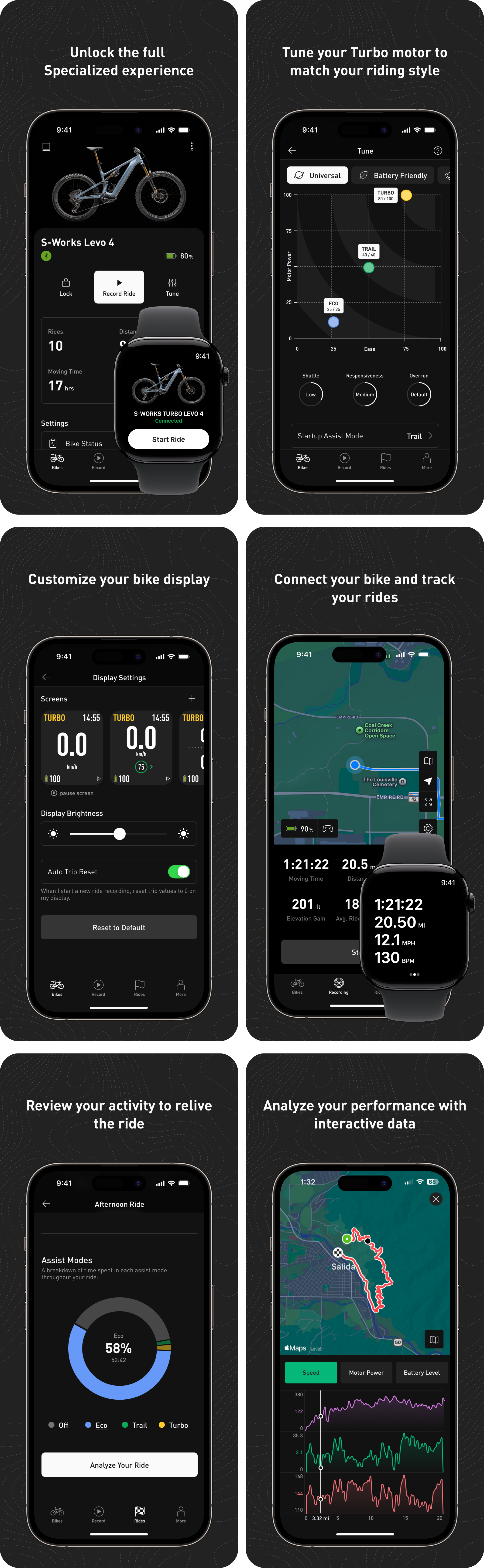
I worked in close collaboration with the engineering team throughout, running regular design/dev syncs to validate feasibility, catch drift early, and ensure what we shipped matched what was designed. This feedback loop helped refine many of the strongest features in the app – ride recording experience (map + stats view), Smart Control (range anxiety solution), and custom bike tuning.
The Solution
The consolidated app brings ride recording, bike management, and performance insights into a single, rider-centered experience.
Unified architecture
A single app architecture replaced the multi-app ecosystem, with consistent navigation patterns that let riders move between ride recording, bike settings, over-the-air updates, and ride history without context switching between apps.
Ride tracking & performance
Smart, continuous ride recording with real-time GPS metrics and detailed post-ride summaries. Interactive charts surface insights that motivate riders without overwhelming them. Integration with Strava, Garmin, and Apple Health connects the app to the broader ecosystems riders already use.
Turbo e-bike management
In-app registration, warranty activation, and tailored control over power delivery, battery performance, and display stats. Security features including Turbo System Lock and real-time system alerts give Turbo owners confidence in their investment.
Scalable component foundation
Every pattern I designed was built with reuse in mind, consistent interaction states, shared tokens, documented usage guidelines. This groundwork directly enabled the Sequoia Design System that followed.
The Outcome
The Specialized App gave riders a single digital home for the rider experience, eliminating the confusion of the multi-app ecosystem and making key features meaningfully more accessible.
Specific results are confidential, but the project achieved its primary goals: reduced friction across core flows, increased discoverability of Turbo features, and a design foundation that enabled the team to ship faster and more consistently in the work that followed.
This project also shaped how I think about design systems work. The best systems aren't built in isolation – they're extracted from real product problems and proven in production before they're codified.
Lessons Learned
Consolidation projects are as much organizational as they are design challenges. Getting alignment on information architecture before anyone sees a screen saved significant rework. Building components with the system in mind from day one, rather than retrofitting them later, is the difference between a project that contributes to scale and one that adds to design debt.